Summer 2026 has been one of the hottest and driest on record in the UK, and Scilly has not escaped from the challenges associated with this. This blog post is one of a series exploring the impacts that the drought has had so far across the islands.
The farming and growing community all over the UK have faced significant challenges, with the lack of rainfall having a large impact from the ground up.
Soil health is key to farming and growing, and as a large part of Scillonian economy, it can impact the livelihood of local farmers. On the Isles of Scilly, the soils are sandier than other areas of the UK. Higher sand content means lower organic matter, the primary function of which is used to binds soil particles together, retaining water in soils. Most organic matter originates from plant tissues, which on average hold approximately 70% water.
In a normal year, ‘soils are regularly in drought during the summer months – probably in around 70% of years’ - Ben Julian, Chair of Farmers & Growers initiative. This year, rainfall has been minimal, making water retention in soil a challenge. Soil has an impact on the productivity of plant growth, holding crucial water stores for growth. The impact of water availability is most noticeable on vegetables, flowers and summer crops. In contrast, ‘bulb crops are well suited to higher soil temperatures and have a better success in drier periods’, explains Ben Julian.
A key indicator of this drought period has been grasses, which are no longer fresh and green but crisp and golden brown. Being shallow rooted and with limited rainfall, grasses stopped growing in June as they were unable to continue to grow.
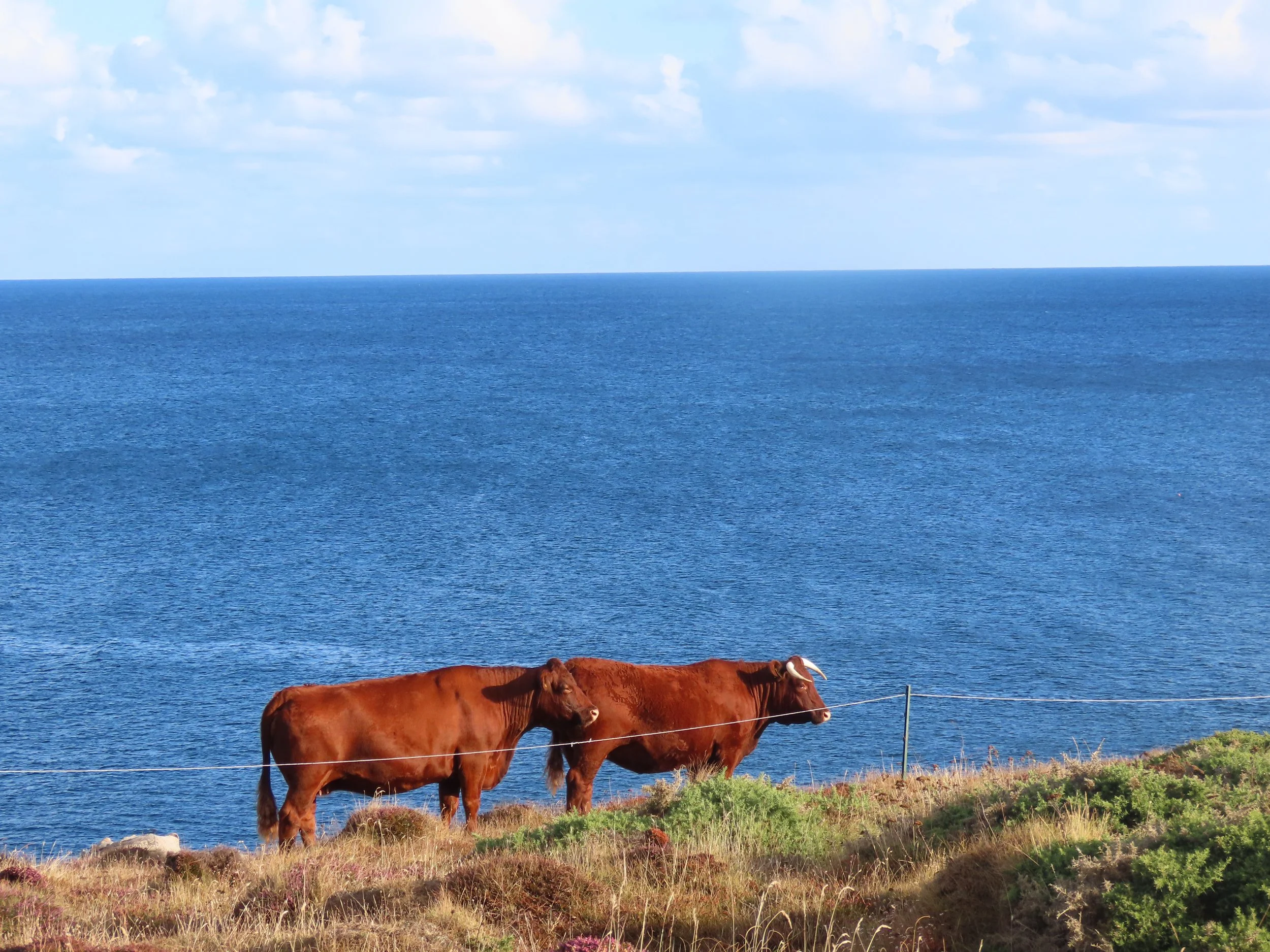
A key indicator of this drought period has been grasses, which are no longer fresh and green but crisp and golden brown. Being shallow rooted, in addition with limited rainfall, grasses stopped growing in June as they were unable to continue to grow. This has a knock-on effect for our cattle farmers, as grass provides the basis of a natural grazing diet, with different species of grass having better nutritional value than others. Grasses provide many of the key proteins, fibres, minerals and vitamins needed to maintain overall cattle health.
Due to the shortage grass-rich of grazing areas and poor forage, winter feed stock is being relied upon much earlier than usual. This creates additional pressure and concern for farmers as they head towards winter. Winter supply reduction, can add to an increase in running costs. St Agnes farmer, Tim Hicks at Troytown Farm, confirmed this:
‘This year, with little to no significant rain since April, I only harvested about two thirds of my normal crop. Since then, there has been no regrowth, so I have been feeding haylage since June. All of last years has been used and I’m now using this year’s supply. I foresee this continuing for several weeks and so my winter stock will be severely depleted’.
It’s not just cattle feed, farmers are struggling with sourcing all livestock supplies on the islands too. This has led to purchasing from the mainland, incurring greater costs than usual. Jess at Seaways Farm, noted that goat supplies pose a particular problem on Scilly.
‘We have had an issue with sourcing enough hay on the islands the last year or so - because of the lack of grass. Farmers are using their hay/silage to feed animals over the summer, and therefore have less hay to sell on. We had to buy a pallet in from the mainland earlier in the year for the goats, which obviously costs a lot more!’
Luckily some farmers are managing to keep cattle fed on grasses; ‘Grazing is far from ideal too but with our smaller cattle herd size we’re managing to move them to new fields often enough for them to have their fill.’ - Jack Armstrong, Hillside Farm
For farmers and growers, water supplies are crucial to not only crop and forage production but animal welfare too. Jack Armstrong, explains:
‘We’ve found this dry period very challenging for our market garden side of the farm and have had to take the difficult decision to stop watering it completely as it takes such a large amount and we’ve needed to prioritise our animals welfare and the needs of the wider island.’
Water stocks on Scilly remain a key concern to many on the islands.
‘Water consumption is currently the largest concern, so we are now using bowsers instead of drinking troughs as these have been turned off just in case the cattle damage a trough and they start to leak, resulting in the islands already stretched supply running out. We are looking at vastly increasing our rainwater harvesting in the next 12 months, and planting more drought tolerant herbal leys for the cattle’ Graham Eggins, Tresco.
This year has been challenging for farmers and growers but has proven how adaptable and resilient the community are.